How physical crude and refined product trading, benchmarks, term contracts, incoterms and logistics work for landlocked Southern Africa, and BOTC's trading model.
Crude oil trading is the invisible machinery that keeps economies moving. Every litre of fuel that reaches a filling station, a mine, a farm or an airport in Southern Africa began its life as a cargo of crude oil traded somewhere on the global market, often weeks or months before it was refined into a usable product. For a landlocked country like Botswana, understanding how crude oil trading and refined petroleum product supply actually work is not an academic exercise. It is central to national energy security, to the price motorists pay at the pump, and to the reliability of supply that keeps hospitals, mines and transport networks running. This guide walks through the mechanics of physical crude oil trading, the benchmarks that set global prices, the contractual structures buyers and sellers use, and the logistics that must be solved to move fuel from a loading terminal on the coast to a depot deep in the interior of the region.
What Is Crude Oil Trading, Really?
At its simplest, crude oil trading is the buying and selling of unrefined petroleum, either as a physical cargo that will actually be delivered, or as a financial instrument used to hedge price risk. The oil trading industry sits between two very different worlds. On one side are producers - national oil companies, international majors and independent exploration and production companies - who need to sell crude as it comes out of the ground. On the other side are refiners, who need a continuous, reliable stream of crude oil of the right quality to keep their refineries running efficiently. Traders, including integrated oil energy companies, sit in the middle, matching supply with demand, managing timing mismatches, financing cargoes in transit, and absorbing price risk that producers and refiners would rather not carry themselves.
Physical crude oil trading is distinct from paper or financial trading. A physical trade means an actual cargo, usually loaded onto a very large crude carrier or a smaller product tanker, changes ownership and is eventually discharged at a refinery or terminal. Financial or paper trading, by contrast, involves futures contracts, swaps and other derivatives that reference the price of crude but do not necessarily result in physical delivery. Both markets are deeply intertwined - the price discovered in the financial futures market for Brent or West Texas Intermediate crude is the reference point used to price the vast majority of physical cargoes worldwide.
- Physical trading: actual cargoes of crude oil or refined products change hands and are delivered by vessel, pipeline or rail
- Paper trading: futures, swaps and options used to hedge or speculate on price movements without physical delivery
- Term trading: repeat purchases under a contract lasting typically six months to several years
- Spot trading: one-off cargoes bought and sold for near-term delivery at the prevailing market price
Benchmarks: Why Brent and WTI Matter to Botswana
Very few crude oil cargoes anywhere in the world are priced as a flat, standalone number. Instead, the vast majority of crude oil and refined product transactions are priced as a differential to a recognised benchmark, plus or minus a premium or discount that reflects quality, location and freight. The two most widely referenced benchmarks are Brent crude, produced in the North Sea, and West Texas Intermediate, produced onshore in the United States. A third benchmark, Dubai/Oman crude, is important for pricing barrels moving into Asian and Middle Eastern markets.
Brent crude is particularly important for Southern Africa because most of the refined petroleum products consumed in the region - whether imported directly as finished fuel or refined at coastal refineries in South Africa, Mozambique or further afield - are ultimately priced off Brent-related benchmarks such as FOB Med Brent, FOB Rotterdam quotations, or Brent-linked Platts assessments for gasoil, mogas and jet fuel. When international news reports that the Brent price has moved higher or lower, that movement filters through the entire supply chain, eventually showing up in the fuel price approved by the relevant national regulator in Botswana and its neighbours.
For a company like Big Oil Trading Company, tracking Brent and other benchmark movements daily is not optional; it is the foundation of every pricing decision. A trader who does not understand how the benchmark, the differential and the freight cost combine to form a landed price cannot competitively source or sell fuel into this region.
The price a motorist pays in Gaborone is the sum of a Brent-linked benchmark, a quality and location differential, freight, duties and margin - not an arbitrary number set at the pump.
Term Contracts Versus Spot Purchases
Buyers of crude oil and refined products, including national fuel companies, large industrial consumers and integrated trading houses, generally choose between two purchasing strategies: term contracts and spot purchases. Each has distinct advantages and risks, and sophisticated buyers often use a blend of both.
A term contract is an agreement to buy a defined quantity of crude oil or product on a regular basis - weekly, monthly or quarterly - over a period that typically runs from six months to several years. Term contracts provide supply security, predictable volumes for budgeting, and often a more favourable long-term relationship with a supplier who can prioritise the buyer during periods of tight supply. The price under a term contract is rarely fixed; it is usually set as a formula tied to a published benchmark for the relevant loading or pricing period, adjusted by an agreed differential.
Spot purchases, by contrast, are one-off transactions for a specific cargo, priced at the market level prevailing at the time of the deal. Spot purchases give buyers flexibility to take advantage of favourable short-term pricing or to cover unexpected shortfalls, but they expose the buyer to greater price volatility and, in tight markets, to availability risk.
- Term contracts: supply security, predictable relationship, formula-based pricing, less flexibility
- Spot contracts: pricing flexibility, opportunistic buying, higher exposure to volatility and availability risk
- Blended strategy: a base of term volume covering essential needs, supplemented by spot purchases to manage seasonal peaks
For customers with tailor-made requirements, a company offering customized term contracts aligned to the customer's own budgeting cycle can materially reduce the administrative and financial burden of fuel procurement. This is precisely the kind of tailored commercial structure that integrated trading companies operating across Southern Africa are positioned to provide, working alongside customers to design supply agreements that reflect their operational calendar rather than forcing customers into a one-size-fits-all purchasing model.
Incoterms and Who Bears the Risk
International Commercial Terms, universally known as Incoterms, define exactly where risk, cost and responsibility pass from seller to buyer in an international sale of goods, and crude oil and refined product trading relies heavily on them. Understanding Incoterms is essential for anyone negotiating a fuel supply contract, because the choice of term determines who pays for freight, who insures the cargo, and at what point ownership and risk transfer.
The most commonly used terms in petroleum trading include FOB (Free on Board), CFR (Cost and Freight), CIF (Cost, Insurance and Freight), and, for inland and cross-border road or rail movements common in landlocked markets, DAP (Delivered at Place) and similar delivered terms.
- FOB: the seller's obligation ends once the cargo is loaded on the vessel at the port of origin; the buyer arranges and pays for freight and insurance from that point
- CFR: the seller arranges and pays for freight to the destination port, but risk transfers to the buyer once the goods are loaded
- CIF: the seller arranges and pays for freight and insurance to the destination port, with risk still transferring at loading
- DAP: the seller is responsible for delivering the goods, and bearing the associated risk and cost, all the way to a named place, which is particularly relevant for road and rail deliveries into landlocked markets
Botswana's position as a landlocked country makes the choice of Incoterm especially consequential. A cargo that arrives CIF at a South African, Namibian or Mozambican port has only completed part of its journey; from there it must still travel hundreds of kilometres by rail or road tanker to reach depots in Gaborone, Francistown or elsewhere in the country. A trading partner experienced in landlocked fuel supply understands how to structure the full chain of Incoterms across the maritime and inland legs so that risk, cost and delivery obligations are clearly allocated at every stage, avoiding costly disputes when something goes wrong mid-journey.
Bunkering and the Marine Fuel Market
Bunkering refers to the supply of fuel to ships for their own propulsion and power generation, and it is a distinct but closely related segment of the oil trading business. Bunker fuel, historically heavy fuel oil but increasingly low-sulphur fuel oil, marine gasoil and, in a growing number of ports, LNG and biofuel blends, must be supplied reliably at ports around the world to keep global shipping - the very vessels that carry crude oil and refined products - moving.
While Botswana itself has no seaports, bunkering matters to the country indirectly in two important ways. First, the cost of bunker fuel is a component of ocean freight rates, and freight is one of the variables that determines the landed cost of every barrel of crude or tonne of refined product that eventually reaches the region. Second, integrated trading companies with a presence in bunkering and marine fuel supply typically also operate storage terminals and vessel chartering capability that can be leveraged for broader crude and product trading activity, creating operational shared gains across shipping, storage terminals and oil trading that benefit the whole supply chain, including customers far from the coast.
Storage Terminals: The Buffer That Keeps Supply Reliable
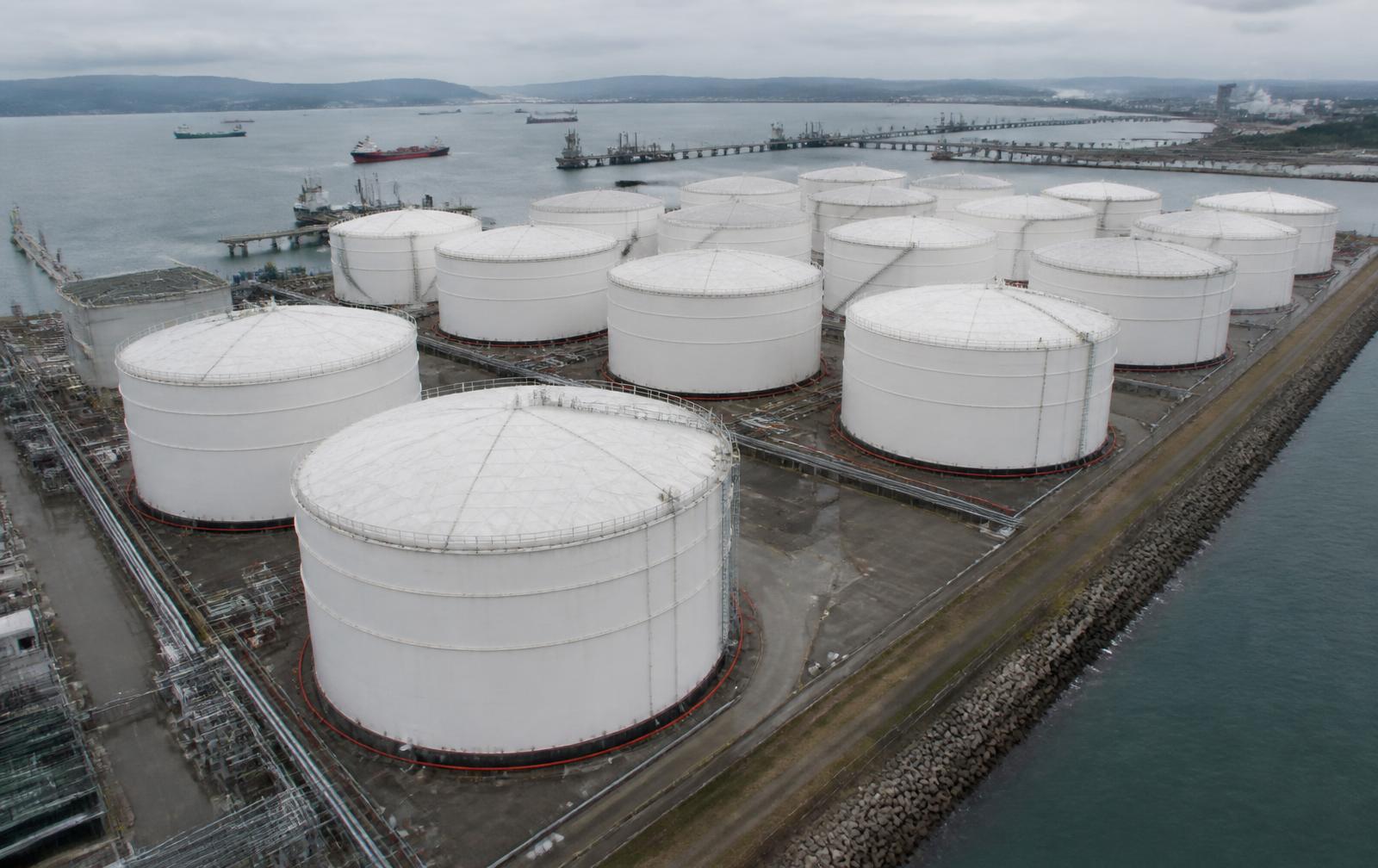
Storage terminals are the unsung infrastructure of the petroleum trade. A storage terminal is a facility, typically located at or near a port, pipeline hub or major inland distribution point, where crude oil or refined products are held in tanks pending onward sale, blending, or distribution. Terminals perform several critical functions: they allow cargoes to be broken down from very large vessel-sized parcels into smaller quantities suited to regional demand; they provide a buffer against supply disruptions; and they enable blending of different grades to meet specific product specifications.
For a landlocked country dependent on imported fuel, the existence of well-managed storage terminals along the supply corridor - whether at the coast, at rail hubs, or at inland depots - is what stands between a temporary disruption somewhere in the world and a fuel shortage at the local filling station. A company that operates or has secured access to storage capacity along the route from coastal terminals into Botswana is far better placed to smooth out the inevitable bumps in global supply than one relying purely on cargo-by-cargo spot purchasing with no buffer stock.
- Break-bulk storage: splitting large tanker cargoes into smaller volumes for regional distribution
- Strategic buffer stock: holding inventory to absorb short-term supply disruptions
- Blending terminals: combining different crude or product streams to meet specification
- Inland depots: the final storage point before road or rail delivery to end customers
Landlocked Country Fuel Supply: The Logistics Challenge
Botswana, like several of its neighbours, imports the overwhelming majority of its refined petroleum products, because it has no domestic refinery and no direct sea access. This makes logistics, rather than crude oil trading in isolation, the single most decisive factor in fuel security. A landlocked country's fuel supply chain typically involves several legs: an ocean voyage bringing crude oil or refined product to a coastal port, discharge and storage at a coastal terminal, onward movement by pipeline, rail or road tanker across one or more international borders, and final distribution to inland depots and filling stations.
Each leg introduces its own risks: port congestion, rail capacity constraints, border delays, road tanker availability, and currency and duty considerations at each border crossing. Effective fuel supply for a landlocked market therefore depends on redundancy - having more than one viable route and more than one storage point - and on strong relationships with logistics providers across the region.
- Coastal discharge and storage at ports such as Durban, Maputo or Walvis Bay
- Pipeline or rail movement of bulk product towards the interior
- Cross-border road tanker transport, subject to customs clearance and regional transit agreements
- Final-mile delivery from inland depots to filling stations, mines, and industrial and agricultural customers
Fuel security for a landlocked nation is not decided at the wellhead. It is decided at every border post, rail siding and depot gate along the route from the coast to the interior.
Risk Management in Oil Trading
Crude oil and refined product prices are among the most volatile of any globally traded commodity, driven by geopolitics, weather, refinery outages, currency movements and shifts in demand. Any serious trading operation must actively manage this volatility rather than simply absorb it. Risk management in the oil trading business typically combines several tools.
Hedging using futures and swaps allows a trader or a large consumer to lock in a price today for a purchase or sale that will physically occur in the future, reducing exposure to adverse price moves between the time a deal is agreed and the time the cargo is actually delivered. Diversification of supply sources reduces the risk that a disruption at a single refinery, port or pipeline can halt the entire supply chain. Counterparty due diligence ensures that a trading partner will actually perform on its contractual obligations, an especially important consideration in markets where cargoes are prepaid or financed weeks before delivery. Currency risk management matters because international crude and product transactions are typically denominated in United States dollars, while local costs and retail prices in Botswana are denominated in pula, so exchange rate movements between contract signing and final payment can materially affect margins.
- Price hedging through futures, swaps and forward contracts
- Supply diversification across multiple sources and routes
- Rigorous counterparty and credit risk assessment
- Active currency risk management given US dollar-denominated global pricing
- Insurance and cargo tracking to manage transit and quality risk
Quality Specifications and Cargo Inspection
Every crude oil cargo and every parcel of refined product is bought and sold against a defined specification - a set of measurable properties such as sulphur content, density, viscosity, flash point, water content and, for crude, American Petroleum Institute gravity. Independent inspection companies test cargoes at loading and discharge to confirm quantity and quality, protecting both buyer and seller. For refined products destined for landlocked markets, specification compliance is especially important, because product that fails to meet the required standard cannot simply be diverted to another nearby buyer the way it might be at a major coastal hub with many potential customers; it may have to be trucked back over long distances, at significant cost and delay.
Reputable suppliers provide certificates of quality and quantity from recognised independent inspectors for every cargo, and buyers should insist on this documentation as a standard condition of any supply agreement, regardless of whether the purchase is under a term contract or on the spot market.
How an Integrated Trading Company Adds Value
An integrated oil energy company - one that combines trading, storage, shipping and logistics capability under a single group - is structurally better positioned to serve a landlocked market than a pure trading desk with no infrastructure of its own. Integration allows a company to control more of the supply chain directly, reducing the number of intermediaries a barrel or a tonne of product passes through between the loading port and the final customer, which in turn reduces cost, shortens response times when problems arise, and improves the reliability of information about where a cargo actually is at any given moment.
This is the model that Big Oil Trading Company, based in Gaborone, Botswana, has built itself around. Structured across strategic business units spanning oil trading, bunkering and storage terminals, refining and used-oil recycling, bitumen manufacturing, shipping and logistics, and boutique filling stations, the company is designed so that its various capabilities reinforce one another across the full supply chain, from crude oil and refinery feedstocks through to finished products such as LPG, naphtha, mogas, jet fuel, gas oil, fuel oil and bio-fuel.
Big Oil Trading Company's Approach to the Regional Market
As a Botswana-based integrated oil energy business, Big Oil Trading Company positions itself around a vision of being the global integrated oil energy people, and an objective to lead in clean oil energy supply and technology. In practice, this means building the kind of strategic infrastructure - supply and trading teams, oil terminals and vessel access - that allows the company to offer customers competitive pricing, tailor-made products and customized term contracts structured around each customer's own budgeting requirements, rather than a generic contract that ignores the realities of operating in Southern Africa.
The company's strategy is built on forming and continuing to form strong partnerships with global market leaders in international oil trading, extending a network that can serve regions, including landlocked markets, that have historically had limited access to efficient, reliable fuel supply. This approach reflects the operational priorities that guide the business: safe people, procedures and operations with minimised environmental impact; long-term relationships with local governments, communities and key stakeholders; and a strong team combining commercial, technical and financial skill across the full range of oil trading, bunkering, storage, shipping and logistics activity.
Conclusion: Trading Expertise as the Foundation of Fuel Security
For Botswana and its landlocked neighbours, reliable access to fuel is never guaranteed by geography; it has to be engineered through disciplined trading practice, sound contractual structures, reliable logistics and active risk management. Understanding how crude oil is benchmarked against Brent and WTI, how term contracts differ from spot purchases, how Incoterms allocate risk along a multi-leg journey, how bunkering and storage terminals underpin the broader supply chain, and how landlocked logistics must be engineered with redundancy in mind, equips buyers, policymakers and businesses across the region to make better decisions about their fuel supply.
Big Oil Trading Company, as a Botswana-based integrated oil energy company, is built around exactly this understanding - combining oil trading, storage terminals, shipping and logistics capability with a clear vision of being the global integrated oil energy people and an objective to lead in clean oil energy supply and technology for the markets it serves.