Exploring Africa's basin geology, seismic surveys, licensing rounds, PSCs, deepwater development and how frontier regions attract E&P investment.
Introduction: Africa's Enduring Promise as a Hydrocarbon Frontier
Few regions of the world retain as much unexplored geological promise as Africa. From the prolific offshore basins of West Africa to the emerging rift systems of East Africa and the long-established fields of North Africa, the continent continues to attract exploration and production (E&P) investment even as global energy markets evolve. For companies with an integrated presence across the value chain, from upstream exploration through to downstream trading, refining and logistics, a solid understanding of how oil and gas exploration and production actually works across African basins is essential.
This article walks through the full lifecycle of an African E&P project: how basins are formed and identified, how seismic surveys de-risk exploration decisions, how licensing rounds and production sharing contracts structure investment, how appraisal and development bring a discovery to production, the contrast between onshore and offshore or deepwater operations, the growing relevance of unconventional resources including coal bed methane to Southern Africa, the importance of local content development, and the responsibilities that come at the end of a field's life through decommissioning.
Understanding Basin Geology: Where Oil and Gas Are Found
Hydrocarbons accumulate in sedimentary basins where organic-rich source rocks have been buried deeply enough, and for long enough, to generate oil and gas through thermal maturation, and where that generated hydrocarbon has migrated into a porous and permeable reservoir rock, sealed beneath an impermeable cap rock that prevents further escape. Africa hosts a remarkable diversity of basin types.
- Passive margin basins, such as those along the West African Atlantic coast, formed as the continent rifted apart from South America, creating thick sedimentary sequences highly favourable for hydrocarbon generation.
- Rift basins, exemplified by the East African Rift System, are associated with continental stretching and have proven prolific for onshore oil discoveries in areas such as the Albertine Graben.
- Cratonic and intracratonic basins, found across parts of Southern and Central Africa, host older sedimentary sequences that, while less prolific for conventional oil, are of growing interest for unconventional gas resources including coal bed methane.
- Foreland and delta basins, such as the Niger Delta, represent some of the most productive hydrocarbon systems in the world, combining abundant source rock, excellent reservoir sands, and effective structural and stratigraphic trapping mechanisms.
Understanding basin type, thermal maturity history, and structural trapping style is the geological foundation upon which every subsequent exploration decision is built.
Seismic Surveys: Imaging the Subsurface
Before a single exploration well is drilled, geoscientists rely heavily on seismic survey data to build a picture of subsurface structures and identify prospects worth testing. Seismic surveying involves generating controlled sound waves, using vibrator trucks onshore or air guns towed behind vessels offshore, and recording how those waves reflect off different rock layers beneath the surface.
- 2D seismic surveys provide line-based cross-sectional images of the subsurface, useful for initial regional reconnaissance across large frontier areas.
- 3D seismic surveys deliver a far more detailed volumetric image of the subsurface, allowing geoscientists to map reservoir geometry, fault networks, and potential hydrocarbon-bearing structures with much greater confidence.
- 4D seismic, involving repeated 3D surveys over time, is used during production to monitor how a reservoir is depleting and to guide infill drilling decisions.
- Ocean-bottom seismic and other advanced acquisition techniques are increasingly used in deepwater and complex geological settings to improve imaging quality beneath challenging overburden such as salt layers.
Once acquired, seismic data undergoes extensive processing and interpretation, integrated with any available well log and geochemical data, to generate prospect maps and estimate the probability of geological success before a costly exploration well is committed.
No well is drilled on hope alone; every prospect is built on layers of geophysical evidence, however imperfect that evidence may be.
Licensing Rounds and Production Sharing Contracts
Access to exploration acreage across most of Africa is granted through structured government licensing processes, most commonly competitive bid rounds in which international and regional companies submit technical and commercial proposals for specific blocks.
- Licensing rounds are typically announced by national petroleum authorities or ministries, with data packages made available to interested bidders to support their technical evaluation of a block's prospectivity.
- Bid evaluation criteria commonly include proposed work programmes, signature bonuses, technical capability, and local content commitments.
- Production Sharing Contracts (PSCs) remain the dominant fiscal and legal framework across much of Africa, under which the contractor bears exploration risk and cost, and in the event of a commercial discovery, recovers costs from a share of production before profit oil is split between the contractor and the host government according to agreed formulas.
- Concession and licence-based systems, more common in some North African and mature jurisdictions, instead grant the contractor ownership of produced hydrocarbons subject to royalty and tax obligations.
- Joint operating agreements govern how multiple companies holding interests in a single licence share costs, risks and decision-making authority through an operating committee structure.
The specific fiscal terms of a PSC, cost recovery limits, profit oil split mechanisms, royalty rates and ring-fencing provisions, materially affect the economics of a project and are central to how investment decisions are made across different African jurisdictions.
From Discovery to Appraisal: Confirming Commerciality
A single successful exploration well confirms that hydrocarbons are present, but it rarely provides enough information to determine whether a discovery is commercially viable. This is the role of the appraisal phase.
- Appraisal wells are drilled at carefully selected locations around the discovery well to test reservoir extent, thickness variation, and fluid contacts across the structure.
- Well testing and pressure analysis provide critical data on reservoir flow rates, permeability, and the likely productivity of future production wells.
- Static and dynamic reservoir modelling integrates seismic, well log, core and test data to build volumetric estimates of recoverable reserves and forecast production performance over the field's life.
- A Field Development Plan is prepared once appraisal confirms commerciality, outlining the number and type of wells, surface facilities, and production strategy required to bring the discovery into production.
Only once these technical and economic evaluations demonstrate a project can generate an acceptable return, accounting for capital cost, fiscal terms, and prevailing commodity price assumptions, does a discovery typically progress toward a final investment decision.
Onshore Operations Versus Offshore and Deepwater Development
The operational, technical and cost profile of an E&P project differs dramatically depending on whether it is developed onshore or offshore, and further still if offshore acreage lies in deepwater.
- Onshore developments generally benefit from lower drilling and facility costs, easier well intervention and workover access, and more straightforward logistics, though they can face land access, community and infrastructure challenges, particularly in remote frontier regions.
- Shallow water offshore developments require fixed platforms or jack-up rigs and benefit from relatively mature engineering solutions, though they remain more capital intensive than onshore projects.
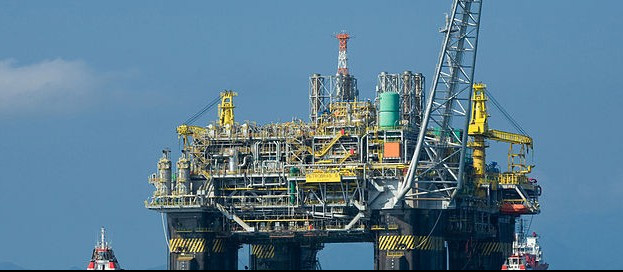
- Deepwater and ultra-deepwater developments, defined broadly as water depths beyond roughly 400 to 1,500 metres and beyond, require floating production systems, subsea well architecture, and highly specialised drilling rigs capable of operating in extreme pressures and remote locations far from shore.
- Deepwater projects, prevalent in basins offshore Angola, Nigeria, Mauritania and Senegal, typically carry the highest capital costs and longest project timelines of any development type, but can also access some of the largest single-field reserve volumes on the continent.
Because deepwater projects demand such significant upfront capital and specialised technology, they tend to be dominated by major international operators with the balance sheet strength and technical capacity to manage the associated risk, often in partnership with national oil companies and independents holding working interests in the licence.
Unconventional Resources and Coal Bed Methane in Southern Africa
While much of the exploration attention across Africa focuses on conventional oil and gas accumulations, unconventional resources are gaining growing relevance, particularly in Southern Africa's coal-bearing basins.
- Coal bed methane (CBM) refers to natural gas trapped within coal seams, generated during the coalification process and held in place by water pressure within the coal's natural fracture network.
- Southern Africa's extensive coal deposits, notably associated with the broader Karoo geological system that extends across the region, present potential CBM resource opportunities that could supplement conventional gas supply for regional power generation and industrial use.
- CBM extraction typically involves dewatering coal seams to reduce pressure and release adsorbed methane, requiring different well designs and production techniques compared with conventional gas wells.
- Shale gas and other tight unconventional resources, while less commercially advanced across most of the continent than in regions such as North America, remain an area of long-term geological interest as exploration technology and understanding of African shale basins continues to develop.
For landlocked, energy-importing Southern African markets, domestically sourced unconventional gas resources carry particular strategic appeal, offering a potential pathway toward greater energy self-sufficiency and reduced reliance on imported liquid fuels for power generation and industrial applications.
Local Content: Building Sustainable Value from Exploration
Across virtually every African hydrocarbon jurisdiction, local content requirements have become a central feature of licensing and regulatory frameworks, reflecting host governments' determination that exploration and production activity should generate lasting economic value beyond royalty and tax revenue alone.
- Local employment targets require operators to prioritise training and hiring of national workforce across technical, professional and support roles over the life of a project.
- Local procurement obligations encourage the development of domestic supply chains for goods and services ranging from catering and logistics to specialised oilfield equipment and engineering services.
- Technology transfer and capacity-building programmes aim to grow indigenous technical expertise in geoscience, drilling engineering, and project management over time.
- Joint ventures with national oil companies and local partners are frequently structured into licence conditions, ensuring domestic participation in project ownership and decision-making.
Effective local content development requires long-term commitment and genuine investment in training and institutional capacity, but when implemented well, it helps ensure that exploration success translates into durable, broad-based economic benefit for the host country rather than a narrowly concentrated windfall.
Decommissioning: Responsible End-of-Field-Life Management
Every producing field eventually reaches the point where continued production is no longer economically viable, triggering the decommissioning phase, the process of safely plugging wells, removing or repurposing facilities, and remediating sites in accordance with environmental standards and licence obligations.
- Well plugging and abandonment involves setting cement plugs at specified intervals within the wellbore to permanently isolate hydrocarbon-bearing zones and prevent any future leakage to surface or between subsurface formations.
- Facility removal or repurposing decisions for platforms, pipelines and onshore infrastructure must weigh environmental impact, cost, and potential alternative uses, such as artificial reef programmes for retired offshore structures where regulations permit.
- Site remediation and environmental monitoring continue for a defined period after decommissioning is complete, verifying that soil, groundwater and marine conditions meet required restoration standards.
- Decommissioning liability and funding provisions are increasingly built into licence and PSC terms from the outset, requiring operators to set aside dedicated funds well before a field approaches the end of its productive life.
The responsible closure of a field is as much a measure of an operator's integrity as the responsible operation of it.
As some of Africa's more mature basins move into later production phases over the coming decades, decommissioning is expected to become an increasingly significant component of overall E&P industry activity and expenditure across the continent.
Why Frontier Regions Continue to Attract Investment
Despite the technical complexity and capital intensity of African exploration and production, frontier basins across the continent continue to attract sustained international investment interest, driven by several enduring factors.
- Relatively underexplored acreage compared with more mature global basins offers the possibility of significant new discoveries at attractive finding costs.
- Improving fiscal and regulatory frameworks in a number of jurisdictions have made licence terms more competitive and predictable for prospective investors.
- Advances in seismic imaging and subsurface interpretation technology continue to reduce exploration risk, improving the probability of technical and commercial success even in geologically complex settings.
- Growing regional demand for energy, combined with a strategic desire among many African governments to develop domestic hydrocarbon resources rather than rely solely on imports, continues to support policy environments favourable to E&P investment.
- Infrastructure development associated with successful projects, including roads, ports and power generation capacity, can generate positive spillover effects for the broader regional economy.
Companies willing to commit the technical expertise, patient capital and long-term partnership approach required to succeed in African E&P continue to find that the continent's basins reward disciplined, well-executed exploration and development programmes.
Conclusion: BOTC and the Future of African Exploration and Production
Big Oil Trading Company Limited, a Botswana-based integrated oil energy company headquartered in Gaborone, includes oil and gas exploration and development among its core strategic business areas, alongside oil trading, refining, shipping and logistics. As the discussion throughout this article illustrates, exploration and production is a discipline built on rigorous geoscience, carefully structured fiscal agreements, patient capital, and a genuine commitment to local content and environmental responsibility across the full life of a field, from the first seismic survey to eventual decommissioning.
In line with its stated objective to lead in clean oil energy supply and technology, and its broader Green Agenda commitment to protecting the environment and the communities in which hydrocarbon resources are found, Big Oil Trading Company approaches exploration and production as an integral part of its wider vision of the global integrated oil energy business, one that connects upstream resource development in Africa's frontier basins to the downstream trading, refining, storage and shipping capabilities that ultimately deliver reliable energy to the people and markets across the region who depend on it.