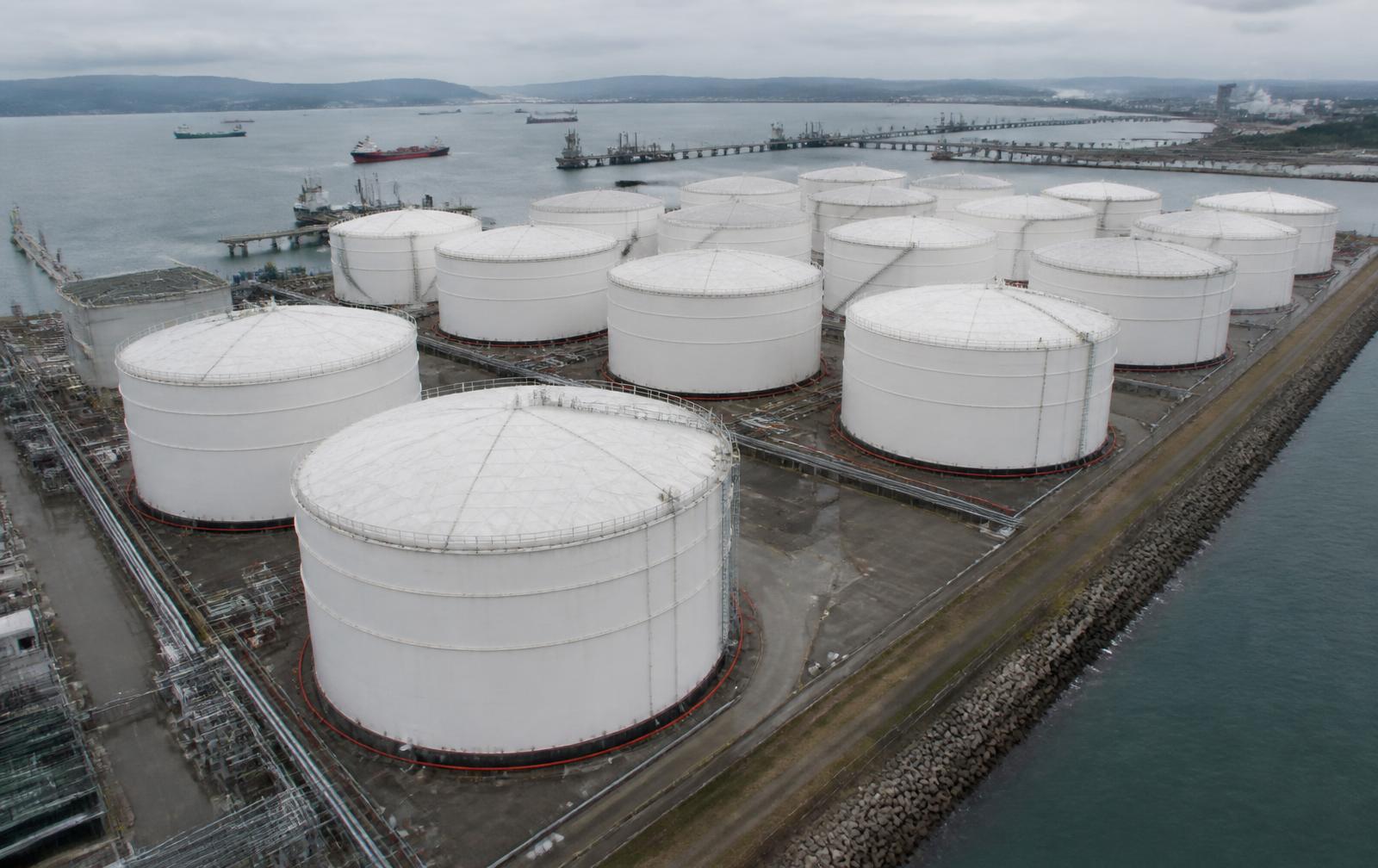

A buyer's guide to fuel oil, transformer oil, bitumen, base oils, gas oil, naphtha, LPG, mogas, jet fuel and bio-fuel - specifications, uses and quality checks.
Refined petroleum products power almost every part of modern life, from the electricity grid and the roads we drive on to the aircraft overhead and the machinery that builds our cities. Yet the term refined petroleum products actually covers a remarkably diverse family of materials, each produced through different refining processes, each governed by its own technical specifications, and each suited to a distinct set of applications. Understanding this product range is essential for any procurement manager, engineer or trading professional who needs to specify, source or evaluate petroleum products with confidence. This guide walks through the major categories in the refined product slate - fuel oil, transformer oil, bitumen, base oils, gas oil, naphtha, LPG, mogas, jet fuel and bio-fuel - explaining what each product is, the specifications that matter, its principal uses, and what buyers should look for when assessing quality.
Fuel Oil: The Workhorse of Heavy Industry and Marine Power
Fuel oil, sometimes called residual fuel oil or heavy fuel oil, is one of the heaviest products derived from crude oil distillation, typically drawn from the bottom of the distillation column after the lighter, more valuable fractions have been removed. Because it is dense and viscous, fuel oil usually needs to be heated before it can be pumped or burned efficiently. Fuel oil is graded by viscosity and other properties, with different grades suited to different burners and engines, ranging from lighter industrial grades to the heaviest residual grades used in large marine engines and power generation boilers.
The principal uses of fuel oil include marine bunkering for large ocean-going vessels, power generation in boilers and turbines, and heating and process energy in heavy industry such as cement production, mining and large-scale manufacturing. In recent years, environmental regulation - particularly the International Maritime Organization's global sulphur cap - has pushed the market strongly towards lower-sulphur fuel oil grades, and buyers should always confirm the sulphur content of any fuel oil cargo against the regulatory limit applicable to their vessel, jurisdiction or equipment.
- Viscosity grade, measured in centistokes, determining how the fuel must be heated and handled
- Sulphur content, now tightly regulated for marine and increasingly for industrial use
- Density and calorific value, which determine energy output per tonne burned
- Water and sediment content, which can cause equipment fouling and combustion problems if excessive
Transformer Oil: A Specialised Insulating and Cooling Fluid
Transformer oil is a highly refined mineral oil used inside electrical transformers to insulate the internal windings and to dissipate the heat generated during operation. Unlike fuel oil, transformer oil is not burned for energy; its value lies in its dielectric strength, its ability to resist electrical breakdown, its thermal stability, and its resistance to oxidation over years of continuous service inside a live transformer.
Because transformer oil degrades over time through oxidation, moisture ingress and the accumulation of dissolved gases from minor electrical stress within the transformer, power utilities must periodically test, filter, or fully replace the oil in their transformer fleets. Used transformer oil that has become contaminated, including historically with polychlorinated biphenyls in some older equipment, presents a genuine environmental and disposal challenge for utilities, which is why technologies capable of processing used oil back into oil meeting new transformer oil standards are of significant commercial and environmental interest across the power sector.
- Dielectric breakdown voltage, the key measure of insulating performance
- Moisture content, which sharply reduces insulating strength if too high
- Acidity and oxidation stability, indicating how well the oil will perform over its service life
- Flash point, relevant to fire safety around live electrical equipment
Transformer oil is not simply a lubricant. It is a safety-critical insulating fluid whose failure can directly cause equipment damage or outages on the electricity grid.
Bitumen: All Grades, Cutbacks and Emulsions
Bitumen, also known as asphalt cement in some markets, is the heaviest and most viscous product derived from crude oil refining, used overwhelmingly as the binding agent in road construction and in waterproofing applications. Bitumen is not a single product but a family of grades and formulations, each engineered for a specific climate, traffic loading and construction method.
Penetration grade bitumen, classified by how far a standard needle penetrates a sample under controlled conditions, is the most common form used in conventional hot-mix asphalt for road surfacing, with softer grades suited to cooler climates and harder grades to hotter climates and heavier traffic. Cutback bitumen is penetration grade bitumen that has been thinned with a volatile solvent, such as kerosene or naphtha, to reduce its viscosity so that it can be applied at lower temperatures, commonly used for surface treatments, priming and tack coats; the solvent evaporates after application, leaving the bitumen to set. Bitumen emulsions are a further formulation in which bitumen is dispersed as tiny droplets in water with the aid of an emulsifying agent, allowing the material to be applied cold or warm without heating and without solvent, which makes emulsions particularly valuable for surface dressing, cold mix asphalt, tack coats and maintenance work where heating heavy equipment on site is impractical.
- Penetration grade bitumen: standard hot-mix road paving binder, graded by hardness for climate and traffic
- Cutback bitumen: solvent-thinned bitumen for lower-temperature application, used in priming and surface treatments
- Bitumen emulsions: water-based dispersions for cold application, surface dressing and maintenance work
- Polymer-modified bitumen: bitumen enhanced with polymers for higher performance under heavy traffic or extreme temperatures
For road authorities and contractors, the correct grade selection is critical: using too soft a bitumen in a hot climate can lead to rutting and deformation under heavy traffic, while too hard a grade in a cold climate can cause premature cracking. Buyers should always specify the required penetration grade, softening point and viscosity against recognised national or international road authority standards, and request certificates of analysis for each batch supplied.
Base Oil: Group I, II and III Explained
Base oil is the foundation ingredient of virtually all finished lubricants, including engine oils, industrial lubricants, greases and hydraulic fluids. Base oils are classified by the American Petroleum Institute into groups according to their manufacturing process and resulting properties, with Groups I, II and III being conventional mineral base oils refined from crude oil, and Groups IV and V covering synthetic base stocks.
Group I base oils are produced through solvent refining, the most traditional and least intensive processing route, resulting in oils with relatively higher levels of sulphur and unsaturated hydrocarbons and comparatively lower viscosity index. Group II base oils are produced through hydroprocessing, a more intensive refining route that removes more impurities and produces a purer, more stable oil with a higher viscosity index and better oxidation stability than Group I. Group III base oils undergo even more severe hydroprocessing, sometimes including hydrocracking and hydroisomerisation, resulting in oils with very high viscosity index and excellent oxidation stability that are often marketed as, or blended into, synthetic and semi-synthetic finished lubricants despite being produced from mineral crude oil feedstock.
- Group I: solvent-refined, suited to less demanding industrial applications and older-technology engines
- Group II: hydroprocessed, cleaner and more stable, now the dominant base stock for modern engine oils
- Group III: severely hydroprocessed, very high performance, used in premium and synthetic-grade lubricant formulations
Buyers formulating or purchasing finished lubricants should always confirm the base oil group, viscosity grade and key performance data such as viscosity index, pour point and oxidation stability, since the base oil accounts for the majority of a finished lubricant's performance characteristics even after additive packages are blended in.
Gas Oil: MGO, DMA and Sulphur Grades
Gas oil is a middle-distillate petroleum product, positioned between the lighter naphtha and kerosene fractions and the heavier fuel oil fractions in the refining process. Gas oil is used as diesel fuel for road transport, as marine gas oil for shipping, and as a heating and industrial fuel, with the specific grade required depending on the engine or equipment it will power and the environmental regulations that apply.
Marine Gas Oil, commonly abbreviated MGO, is a distillate marine fuel used in smaller vessels, auxiliary engines, and increasingly as a compliant fuel option under tightened marine sulphur regulations. DMA is a specific International Organization for Standardization marine fuel category describing a distillate marine fuel grade with defined limits on viscosity, sulphur, density and other properties, essentially formalising what is commonly sold commercially as MGO. Beyond the marine market, gas oil is also widely specified by its sulphur content for road and industrial use, with 0.5 percent sulphur and 500 parts per million sulphur grades historically common in markets transitioning towards cleaner fuel standards, alongside ultra-low-sulphur grades increasingly required in more stringently regulated markets.
- MGO / DMA grade: distillate marine fuel for smaller vessels and auxiliary engines, compliant with tightening marine fuel regulations
- 0.5% sulphur gas oil: a mid-transition grade used in markets moving away from higher-sulphur fuels
- 500 ppm sulphur gas oil: a lower-sulphur grade suited to more advanced engine and emissions technology
- Cetane number: a key quality indicator for diesel-type gas oil, reflecting ignition quality in compression engines
Buyers of gas oil, whether for road transport fleets, generators, or marine use, should always match the sulphur specification to the regulatory requirement and engine technology in question, since supplying a higher-sulphur grade than permitted can expose the buyer to regulatory penalties, while unnecessarily specifying an ultra-low-sulphur grade where it is not required simply adds cost without benefit.
Naphtha: The Petrochemical and Blending Feedstock
Naphtha is a light, volatile distillate fraction produced early in the crude oil refining process, positioned between the lightest gases and heavier gas oil fractions. Naphtha has two broad commercial destinies: it can be used as a petrochemical feedstock, most importantly for steam cracking to produce ethylene, propylene and other building blocks of the plastics and chemicals industry, or it can be further processed in a catalytic reformer to become a high-octane blending component for gasoline.
Naphtha is also used as a solvent in various industrial applications and, as noted earlier, as the thinning agent in cutback bitumen formulations. Because naphtha's value depends heavily on its intended end use, key specifications vary: petrochemical buyers focus closely on paraffin, naphthene and aromatic content, since these determine cracking yield, while blending and solvent buyers focus more on distillation range and purity.
LPG: Liquefied Petroleum Gas for Households and Industry
Liquefied Petroleum Gas, universally known as LPG, is a mixture predominantly of propane and butane that is gaseous at normal atmospheric pressure but readily liquefies under modest pressure, allowing it to be stored and transported efficiently in cylinders, bullets and larger pressurised tanks. LPG's clean-burning characteristics, portability and wide availability have made it a mainstay fuel for household cooking and heating, commercial catering, agricultural applications such as crop drying, and as an autogas fuel for vehicles in many markets.
- Propane/butane ratio: determines vapour pressure and suitability for climate and application
- Vapour pressure: affects safe storage and handling requirements
- Sulphur content: relevant to odour, combustion cleanliness and equipment corrosion
- Moisture content: excessive moisture can cause valve and regulator freezing in cold conditions
For households and businesses across Southern Africa, reliable LPG supply depends on a well-managed cylinder distribution and cylinder-exchange network, alongside bulk storage capacity to buffer against import supply fluctuations, given that most markets in the region import the bulk of their LPG requirements.
Mogas: Motor Gasoline Grades and Octane
Mogas, short for motor gasoline, is the fuel used in spark-ignition petrol engines that power the majority of passenger cars and light vehicles on the region's roads. Mogas quality is defined primarily by its octane rating, which measures the fuel's resistance to knocking or premature detonation inside the engine cylinder; higher-compression, higher-performance engines generally require higher-octane fuel to run efficiently and avoid engine damage.
Beyond octane rating, mogas specifications also govern sulphur content, vapour pressure, distillation characteristics and oxygenate content where blending with ethanol or other bio-components is permitted or mandated. Regulatory bodies across Southern Africa, as in most of the world, have progressively tightened sulphur limits in mogas to reduce vehicle emissions and to allow the use of more advanced exhaust after-treatment technology in modern vehicles.
- Octane rating: measured as Research Octane Number, indicating knock resistance
- Sulphur content: increasingly restricted to support cleaner combustion and emissions equipment
- Reid vapour pressure: affects evaporative losses and cold-start performance, often seasonally adjusted
- Ethanol or oxygenate blending: where permitted, used to raise octane and reduce certain emissions
Jet Fuel: A Safety-Critical Specification Product
Jet fuel, most commonly supplied internationally to the Jet A-1 specification, is a kerosene-based distillate produced to some of the most exacting and tightly controlled specifications of any refined petroleum product, because failure of jet fuel quality in flight carries catastrophic safety consequences. Jet fuel specifications govern freezing point, to ensure the fuel remains liquid at the very low temperatures experienced at cruising altitude, flash point, for ground handling safety, thermal stability, to prevent the formation of deposits inside modern high-temperature aircraft engines, and strict limits on water, particulate and microbial contamination.
- Freezing point: must remain well below the coldest temperatures expected at cruising altitude
- Flash point: a minimum threshold required for safe ground handling and storage
- Thermal stability: prevents deposit formation in aircraft fuel systems and engines
- Contamination limits: extremely strict controls on water, particulates and microbial growth
Because of these exacting requirements, jet fuel supply chains rely on continuous quality assurance at every handling point, from refinery gate through pipeline, storage terminal, into-plane fuelling equipment and finally the aircraft itself, with filtration, water-detection and additive injection systems built into the supply chain at multiple stages. Any buyer or supplier involved in jet fuel logistics must operate to internationally recognised joint industry quality control standards, given the safety-critical nature of the product.
Bio-fuel: The Renewable Component of the Fuel Mix
Bio-fuel refers to fuels derived wholly or partly from renewable biological feedstocks rather than from crude oil, and it is an increasingly important component of the global refined product slate as regulators and consumers seek to reduce the carbon footprint of transport and heating fuels. Common bio-fuel categories include bioethanol, typically produced from sugar or starch crops and blended into mogas to raise octane and reduce net emissions, and biodiesel or renewable diesel, produced from vegetable oils, used cooking oil or animal fats and blended into or used as a substitute for conventional gas oil.
A growing area of interest within the industry, and one explicitly highlighted by forward-looking integrated oil energy companies, is the development of nonfood-based bio-fuels - fuels derived from feedstocks that do not compete with the food supply chain, such as certain waste oils, algae or non-edible crops - which offer a pathway to reducing emissions without placing additional pressure on agricultural land and food security. Buyers evaluating bio-fuel blends should confirm blend percentage, feedstock origin, and compliance with the base fuel specification the bio-component is being blended into, since an improperly blended or out-of-specification bio-fuel component can cause the same operational problems as a contaminated conventional fuel.
Evaluating Quality: What Every Buyer Should Check
Across every product category described above, several quality assurance principles apply universally, and disciplined buyers should build these checks into every purchase regardless of product type or contract size.
- Always request a certificate of quality and a certificate of quantity from an independent, internationally recognised inspection company for every cargo or batch
- Confirm the exact specification standard being referenced, whether an international standard, a national standard, or a manufacturer's own specification, and ensure it matches the intended end use and any applicable regulation
- Insist on sampling protocols that allow for retained samples in the event of a later quality dispute
- Understand how the product will be stored and handled after delivery, since even a product that meets specification at loading can degrade or become contaminated through poor storage, inadequate tank cleaning, or extended transit times
- Work with suppliers who have genuine technical understanding of the product range, not simply commercial intermediaries reselling cargoes they cannot describe in technical detail
A specification sheet is only useful if the supplier behind it can actually explain, and stand behind, every number on the page.
Big Oil Trading Company's Product Range
This full spectrum of refined petroleum products - fuel oil in its various grades, transformer oil, bitumen in all grades including cutbacks and emulsions, base oil across Group I, II and III, gas oil in MGO DMA, 0.5 percent sulphur and 500 parts per million sulphur grades, naphtha, LPG, mogas, jet fuel and bio-fuel - reflects the direct product range that Big Oil Trading Company, headquartered in Gaborone, Botswana, is structured to supply. As a Botswana-based integrated oil energy company operating across strategic business units in oil trading, storage terminals, refining, bitumen manufacturing and shipping and logistics, the company works to establish itself as an international trading conglomerate equipped with the strategic infrastructure of supply and trading teams, terminals and vessels needed to provide competitive pricing, tailor-made products and a fully integrated delivery service.
In line with its objective to lead in clean oil energy supply and technology, the company also places particular emphasis on transformer oil, including proprietary technology aimed at turning used, contaminated transformer oil into new, clean oil that meets today's industry standards, reducing disposal costs and environmental risk for power utilities. Guided by its vision of being the global integrated oil energy people, Big Oil Trading Company approaches every product in its range with the same underlying principle set out in this guide: that quality specification, proper handling and technical understanding are what separate a reliable fuel supply relationship from a risky one.
Conclusion
The refined petroleum products that power transport, industry, agriculture and the electricity grid are not interchangeable commodities; each grade of fuel oil, each bitumen formulation, each base oil group and each fuel specification exists because a specific application demands specific performance characteristics. Buyers who take the time to understand these distinctions - and who insist on proper specification, certification and quality assurance at every purchase - are far better placed to avoid costly equipment damage, regulatory non-compliance or supply disruption. For businesses and consumers across Botswana and the wider Southern African region, working with a supplier that combines a broad, well-specified product range with genuine technical understanding, such as Big Oil Trading Company, is one of the most effective ways to secure that reliability.